 搜索
搜索


 搜索
搜索
Abid Butt:Bringing An Asian Brand To The World
When Abid Butt took over as CEO of Banyan Tree Hotels and Resorts, Singapore, about a month ago, his challenges included guiding the brand through an aggressive growth strategy — particularly in China — as well as keeping Banyan Tree relevant in its current markets. Fortunately, Butt is well prepared for the job.
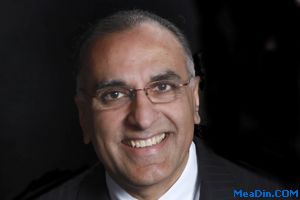
Abid Butt,CEO of Banyan Tree Hotels and Resorts, Singapore
When Abid Butt took over as CEO of Banyan Tree Hotels and Resorts, Singapore, about a month ago, his challenges included guiding the brand through an aggressive growth strategy — particularly in China — as well as keeping Banyan Tree relevant in its current markets. Fortunately, Butt is well prepared for the job, having served as area general manager for Banyan Tree Phuket over 10 years ago and Banyan Tree’s first vice president of operations — not to mention his more recent experience as vice president for asset management for Host Hotels & Resorts in the United States.
Report spoke with Butt about his priorities for Banyan Tree as well as his views about the evolution of the luxury hotel experience.
Report: How does your previous experience, particularly that with Banyan Tree, contribute to your approach to your new position?
Abid Butt: The benefit I have is that I was with the organization some time ago, when the company was a lot younger, with far fewer hotels than what we have today. So I saw the organization at the root of when we began. I can relate to where we were, what made us successful and how we need to move forward. So my transition back into the organization has been a bit easier, and I understand it from a historical perspective.
Also, having worked in Asia and the Americas, I can relate to some of the challenges that come up in operating across different geographic and cultural boundaries.
Report: What are your most important priorities right now for the Banyan Tree brand overall?
Butt: It’s taking a very strong brand, which is very well articulated — people know exactly what Banyan Tree is — and looking at our sister brand, Angsana, which is a phenomenal brand, but it’s not as well known as Banyan Tree is today. So making sure that gets a prominent presence, having growth in both of the brands and making sure we stay true to our core brand promise, what we are about, as we grow in all these different countries. Banyan Tree is a company with Asian roots, and a lot of what we do is delivered with the Asian flair, so we want to make sure that no matter where we end up, we can still hold true to that brand promise.
Report: How would you sum up that brand promise?
Butt: With the Banyan Tree brand, romance and intimacy have been prominent in our resort hotels. It’s personalization. To really find details is what we’ve been about and what we’ve been able to deliver to people, and that’s what our guests have enjoyed. We want to make sure that continues as we grow and become a bigger organization.
Report: As the company becomes more global, where do you see the biggest opportunities for your pipeline?
Butt: In China, our hotels will probably triple by 2014. The pipeline is huge. We have great partnerships with lots of folks in China, and that number continues to grow. China is where our biggest growth pipeline is today.
We also have European projects coming online. Unfortunately, with the European uncertainty, some of the projects are not moving as fast. We have projects coming in Greece, Spain, Turkey. All these things are in the works.
Report: Given that China is your top priority, what do you see as the main keys to Banyan Tree’s success there?
Butt: We’ve been about sense of place, so whether we are in Mexico or Phuket or Maldives, sense of place is very important to us. It’s no different when we go into China. There is a huge population that is affluent and likes to experience luxury products. We have to be able to deliver that sense of place and our core brand promise in China. Much like any other market, we have to understand the likes and dislikes of that particular traveler.
The workforce in China also is going to be a big challenge for us. We’ve partnered with universities in different areas, to take their graduates and put them through training programs in different hotels so we have folks who understand the Chinese market and are able to communicate very well because of language abilities, and train them on what Banyan Tree is all about.
Report: For your current portfolio, what are the main keys to maintaining and improving quality?
Butt: We’ve been all about the triple bottom line, if you will, that looks after the shareholders, the community and the environment. In every project we have done, starting with the very first one, CSR initiatives are very important. We have to make sure in each of the communities we go to, we never forget that. That presents challenges across different borders with local regulations, language barriers, but somehow we need to make sure we are staying true to all of our stakeholders.
The demands of travelers are ever changing. Travelers really know what they want because they have access to enormous information about any destination. They really are specific about what they want; we need to make sure we deliver their needs and wants. There is looking after the cultural elements when they visit one of our destinations, or if they are into the social responsibility side of things, we can get them involved in that. It is about personalization.
Report: How have you seen the demands of luxury consumers in particular evolve, and what is Banyan Tree doing to address those changing needs?
Butt: Luxury consumers more than ever, because of time constraints, don’t want to hassle with the basic stuff. In luxury travel, that’s absolutely taken for granted. Even customizing their vacations is more important. We have to be able to get to know people far better as they have gotten to get to know the destinations. We have to make sure we are able to understand their wants and needs and be able to deliver to them. That’s really the biggest challenge, because there are so many options available in each market. There is a wealth of knowledge travelers have. How can we deliver to each of those points without compromising the service level and making sure we are staying true to our brand promise?
Report: If we were to talk a year from now, what would you hope to have accomplished in your new position, and what would you expect the headlines about Banyan Tree to be?
Butt: The biggest challenge we’re up against in a growth mode is developing the human capital. We want to make sure we have people to go to these different parts of the world and look after our guests, look after the partnerships being developed. My hopes are that a year from now, a year-and-a-half from now, we’ll see the initiatives we’ve put in place — ties with different schools or our internal Banyan Tree management academy — have paid dividends and we have strong leaders coming in to work in our hotels all over the world.
It’s also about developing stronger relationships with our developers, with new owners in different parts of the world where we’re currently not present. I’d like to be able to look back and say we selected some other destinations where we can deliver unique experiences to people from Tibet to Mexico, from one side of the world to the other.
0


