 搜索
搜索


 搜索
搜索
Six Must Haves for a Cutting Edge Hotel Website
As new online marketing channels and trends continue to emerge, hotel websites are still a vital mainstay that both independent and branded hoteliers are focused on entering 2012. And keeping your website design modern and engaging is imperative to driving revenue.
As new online marketing channels and trends continue to emerge, hotel websites are still a vital mainstay that both independent and branded hoteliers are focused on entering 2012. And keeping your website design modern and engaging is imperative to driving revenue.
In the hotel Internet marketing industry, we read quite a bit about the various channels that travel shoppers use and how complex the buying process is. We see how much weight shoppers put on reviews, social media recommendations, online travel agencies (OTAs) and other channels. And although it’s a no brainer for hotels to have a strong presence in these maturing channels, traditional websites (over 50% of industry bookings are through direct websites) still play just as an important role—specifically website designs. Let’s assume travel shoppers can find your site . With the attention span of today’s consumers and the amount of brand and ad impressions they’re exposed to, you have a limited chance to leave a lasting impression with your website… but it can be done.
Let’s delve into six key trends in hotel website design that will help your property, whether branded or independent, impress and engage travel shoppers. We’ll spare you the technical talk and get right to business.
Faster Load Time
With advances like HTML5 and CSS3, website designers now have improved, yet subtle design capabilities. But more importantly, less reliance on Flash and older technology means faster load time for websites. And considering that travel shoppers conduct around a dozen different searches and visit over 20 different websites before making a reservation (according to Google), time is valuable. Often times, especially on complex custom websites, an extra second or two of load time can send an already feverish travel shopper clicking the back button… and moving away from your site. On the other hand, a custom site that loads quickly also quickly appeases the shopper, at least allowing for instant engagement.
Large, Layered Imagery and Elements
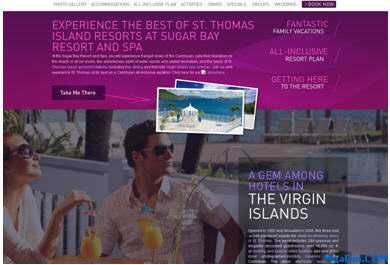
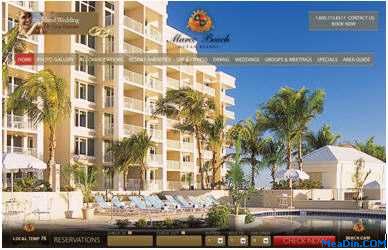
Standard rotating header imagery and photo galleries are not necessarily a thing of the past, but they can appear dated today. Taking over, are large, high-resolution professional images that are often layered. The images catch the eye, and if done appropriately, portray the property well—including rooms, amenities and area attractions. The depth looks upscale and allows for better utilization of space. Here’s an example with large, dim background imagery, separate copy areas and calls to action, all in a layered style:
Emphasis on Scrolling
Also allowing for more efficient use of space is scrolling. If properly implemented—with separate, clearly defined content areas that draw visitors down pages—scrolling can put more information on one page and even reduce the number of overall pages. This makes it easy for website visitors to get more information without having to constantly click from page to page. It also allows hoteliers and designers to pull visitors downward, enticing them with more imagery, calls to action and perhaps offers, all in one location. Check out this site to see effective utilization of scrolling.
Social Media Hubs
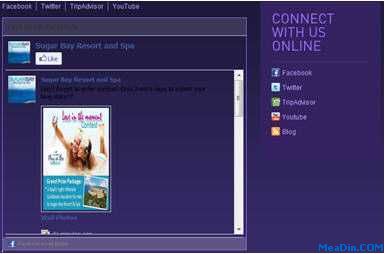
Beyond simply adding static Facebook, Twitter, YouTube and TripAdvisor logos in the headers or footers of hotel websites, “social hubs” are becoming increasingly popular. Social hubs basically centralize all of your property’s social media sites, many times, in the form of a webpage. This way, when a visitor lands on the page, they’re exposed to your entire social media presence, further immersed in your hotel’s brand. Instead of simply becoming a fan on Facebook, they can follow you on Twitter, watch a video or two on YouTube and scan your TripAdvisor reviews.
Improved Usability
After a visitor has landed on your page, scanned the homepage and perhaps scrolled down, what do they do? Is it easy for them to find the information they need via your navigation? Does your site’s architecture make for a positive user experience? Putting yourself in the shoes of a travel shopper, using professional hotel website designers, conducting usability tests (which are easy to do and relatively inexpensive) and/or using website heat maps and other functionalities can help ensure your site has high usability. Straightforward property information, local area and attraction information, intuitive navigation and calls to action to the booking engine from every page (with clear hover states) are items that make it easier for travelers to find the information they need to make informed purchase decisions. Overall, the mindset of the travel shopper matters just as much, if not more, than the mindset of the hotel when designing a website.
Mobile Presence
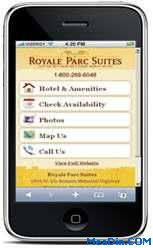
With eMarketer reporting that up to 25% of smartphone users book rooms on their mobile devices and Greystripe reporting that 94% of smartphone users use their devices to research and plan travel, it’s simple to see just how important mobile websites are for hotels. When a shopper conducts a search on their mobile device—often their preferred channel—and finds your hotel’s website, having a mobile ready site can pay big dividends. A condensed site that is tailor fit for mobile devices—with succinct copy, reduced image size and simpler navigation—is a must. If a shopper lands on a non-mobile friendly site, the margins will be off, they’ll have to scroll sideways and the entire display will not be user-friendly, leading to fast abandonment and business for your competition. Mobile sites can also include the option to book on every page, directions and maps and make it easier for travelers to “check in” to your property on social sites.
Now keep in mind that there are many other facets of a successful hotel website, including search marketing, compelling content, an effective booking engine, etc. However, once a travel shopper does reach your site, the design is what forms their initial impression, establishing an instantaneous connection and trust. With today’s ever-changing online environment, and often times "digitally distracted” travel shoppers, it’s vital that your hotel’s site has a design that stands out. Otherwise, you could easily get lost in the shuffle and miss out on increased revenue.(The Chinese translation)
0


